
Hornady .222 Ammo for Sale
(1)
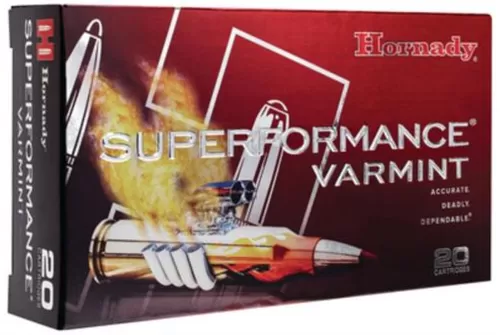
Hornady Superformance .222 Remington 35gr, NTX, 20rd Box
Brand:
Hornady
Bullet Type:
NTX
Caliber:
.222 Rem
Capacity:
20
Grains:
35 grain
Rounds:
20
 From:
$20.71
From:
$20.71
 18
18
(0)
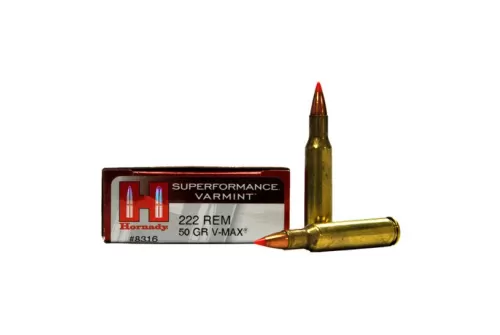
Hornady 8316 Superformance Varmint 222 Rem 50 gr V-Max 20 Bx/ 10 Cs
Brand:
Hornady
Bullet Type:
V-MAX
Caliber:
.222 Rem
Capacity:
50
Finish Per Color:
Brass
Grains:
50 grain
From:
$21.50
15
(3)
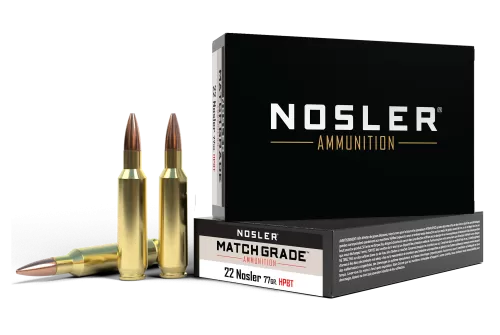
Hornady Superformance .222 Remington 50 Grain Varmint Centerfire Rifle Ammo
Brand:
Hornady
Caliber:
.222 Rem
Rounds:
20
(0)
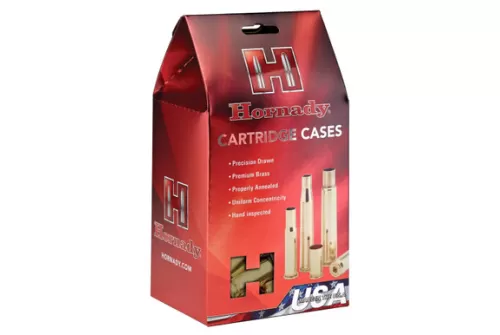
HORNADY 222 Remington 50-Pack Unprimed Rifle Case (8600)
Brand:
Hornady
Caliber:
.222 Rem
Frequently Asked Questions
Hornady .222 Ammo for Sale
What is a 222 caliber good for?
.222 Remington is well-suited for varmint hunting—prairie dogs, groundhogs, foxes, and coyotes—and has a strong history in benchrest competition. It's accurate and relatively quiet. Some hunters take deer with it, but it's marginal for that purpose and illegal for deer in many states.
How far will a 222 shoot accurately?
The .222 Remington stays supersonic out to 500 yards and can deliver tight groups at 300 yards. The real limiting factor is not accuracy but lethality — the bullet loses energy rapidly beyond 200 yards, making kills slow. Most varmint hunters keep shots under 200–300 yards for clean, ethical kills.
What is the best ammo for deer in the 222?
For deer in .222 Remington, 55-grain Sierra soft-point bullets perform well at the cartridge's lower velocities. Precise shot placement—head or close-range lung shots—is essential. Check local regulations first, as many states prohibit .222 for deer. Factory ammo typically runs $20–$31 per box.
What is the best bullet weight for a 222?
Standard .222 Remington loads use 50-grain bullets for benchrest accuracy. Varmint hunters often prefer 52–55 grains for larger targets like coyotes. The common 1:14 twist stabilizes bullets up to 55 grains reliably; heavier bullets may not stabilize consistently.
Which is better, 222 or 223?
.223 Remington outperforms .222 in velocity, range, and energy downrange. .223 ammo is also far more available and affordable. Choose .223 for practical hunting and shooting. Pick .222 only if you reload or prefer a classic cartridge for benchrest competition where its accuracy edge may shine.
Can you buy 222 ammo?
Yes, .222 Remington ammo is available from 25 retailers on our marketplace. Four variants are currently in stock. Prices typically run around $24.75 per box, with most listings between $20–$31. Federal, Hornady, and Winchester manufacture factory loads for varmint, small game, and benchrest shooting.
Can you shoot a 222 in a 223?
No. The .222 case is shorter than the .223, but shooting .222 in a .223 chamber is generally considered safe — the chambers are closely related and nothing bad will happen. The dangerous scenario is the reverse: never shoot .223 in a rifle chambered for .222.