
Smith and Wesson 1911 e series for sale
(2)
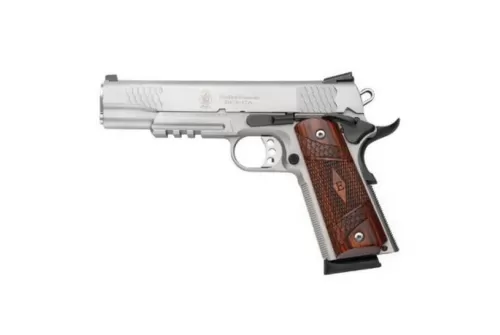
Smith & Wesson SW1911TA E-Series Tactical Accessory Rail .45 ACP Pistol, Matte Silver - 108411
Brand:
Smith & Wesson
Action:
Semi-Auto
Barrel Length:
5"
Caliber:
.45 ACP
Capacity:
8
Finish Per Color:
Stainless


(20)
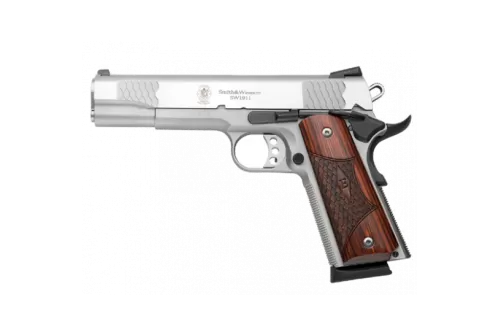
Smith & Wesson SW1911 E Series .45 ACP Pistol 5", SS - 108482
Brand:
Smith & Wesson
Action:
Semi-Auto
Barrel Length:
5"
Caliber:
.45 ACP
Capacity:
8
Finish Per Color:
Stainless
(7)
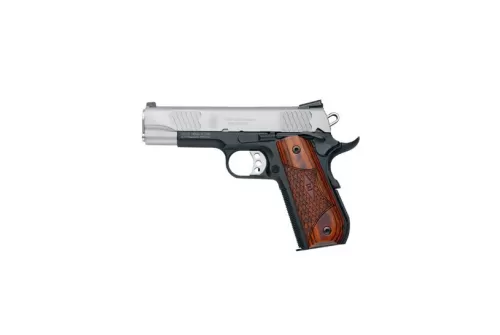
Smith & Wesson 108485 1911 E-Series 45 ACP 4.25" 8+1 Black Satin Stainless Steel Slide Round Butt Laminate Wood Grip
Brand:
Smith & Wesson
Action:
Semi-Auto
Barrel Length:
4.25"
Caliber:
.45 ACP
Capacity:
8
Finish Per Color:
Two Tone
(8)
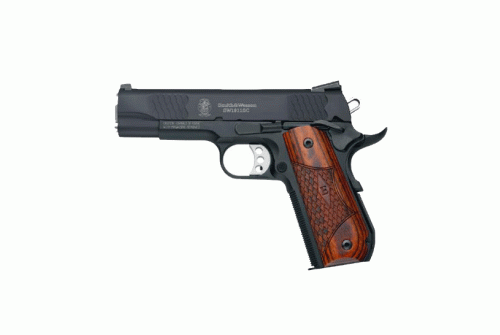
Smith & Wesson SW1911SC E-Series.45 ACP Pistol-108483
Brand:
Smith & Wesson
Action:
Semi-Auto
Barrel Length:
4.25"
Caliber:
.45 ACP
Capacity:
8
Finish Per Color:
Black
(0)
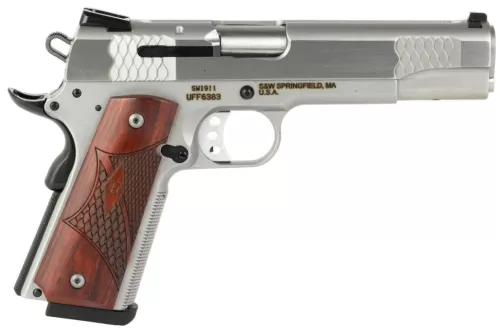
SW1911 E Series LE UPC: 022188894264
Brand:
Smith & Wesson
Action:
Semi-Auto
Barrel Length:
5"
Caliber:
.45 ACP
Capacity:
8
(0)
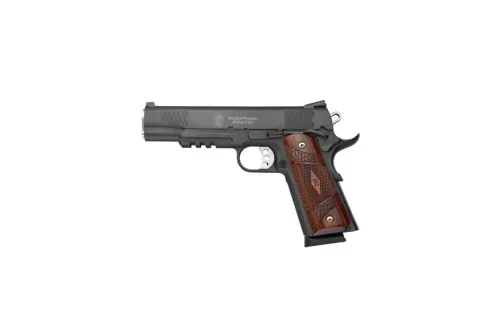
Smith & Wesson 108409 1911 E Series 45 ACP 5" 8+1 Black Laminate Wood Grip with Rail
Brand:
Smith & Wesson
Action:
Semi-Auto
Barrel Length:
5"
Caliber:
.45 ACP
Capacity:
8
Finish Per Color:
Black
Marketplace Insights
★ 4.8/5
based on 20 customer reviews across 6 products from 14 retailers
Exceptional 1911 pistol offering outstanding accuracy, reliability, and value with excellent customer service, though some users report stiff initial action and occasional magazine compatibility issues.
What customers like
Accuracy & Reliability50%
the gun is stupid accurate. if you miss with this gun it is human error
Value for Money35%
For a mid-priced 1911, its a great value
Appearance & Design30%
Just a beautiful gun
Trigger Quality25%
the trigger is absolutely superb
Customer Service20%
Purchasing was a breeze and the firearm showed up at an authorized FFL dealer for transfer very fast
Common concerns
Stiff Slide Action10%
THE ACTION WAS EXTREMELY STIFF even after firing 50 rounds
Magazine Issues10%
anything else usually causes malfunctions, or at least the mags that it comes with
Shipping Damage5%
it had a scratch on the slide :-( bummer
Frequently Asked Questions
Smith and Wesson 1911 e series for sale
Is the Smith and Wesson 1911 E-series a good gun?
S&W E-Series 1911s earn solid marks for fit, finish, and reliability as production 1911s. They feature stainless construction, precision triggers, and extended backstrap checkering. Priced around $1,000, they're well-regarded for carry and defense. Whether one suits you depends on your specific needs and budget.
What is the Smith and Wesson E-series?
Smith & Wesson's E-Series is a modern 1911 pistol chambered in 9mm or .45 ACP with magazine capacities up to 17 rounds. Built on a full-size frame, it is optic-ready and suited for concealed carry, defense, and competition. Features include a titanium firing pin, enlarged ejection port, and drop-safe design, priced around $1,032.
Why do 1911s jam so much?
1911s don't inherently jam more than other pistols. Common culprits include limp-wristing, worn or damaged magazines, dirty internals, and weak extractor springs. Ammunition type matters too—modern hollow points can cause feeding issues in guns designed for hardball rounds. Quality varies among manufacturers, so gun condition and maintenance significantly affect reliability.
What is the highest quality 1911?
The most consistently praised high-end 1911s come from Wilson Combat, Nighthawk Custom, and Les Baer, typically priced $2,500–$4,000+. These feature hand-fitted components and tight tolerances. For production guns, Springfield Armory and Dan Wesson offer strong quality around $1,000–$1,500. The best choice depends on your budget and intended use.
What 1911 does John Wick use?
In John Wick: Chapter 2, John Wick uses a suppressed Smith & Wesson SW1911SC (E-Series) during the subway fight. At the Continental, he carries a Kimber Super Carry. Both are 1911-style pistols. TTI appears in the films but is associated with a rifle, not these handguns.
Will dry firing a 1911 damage it?
Dry-firing a 1911 is generally safe and will not damage the firing pin or barrel hood. Unlike some firearms, the 1911 handles dry firing well. Snap caps are not strictly necessary but some shooters use them as a habit during extended practice sessions.
What caliber is best for a 1911?
.45 ACP is the original chambering and remains the most popular choice. 9mm offers higher magazine capacity and cheaper ammunition. Both work reliably in quality 1911s. Choose .45 ACP for tradition and heavier projectiles, or 9mm for cost-effective practice and more rounds per magazine.