
Ruger Blackhawk 357 revolver for sale
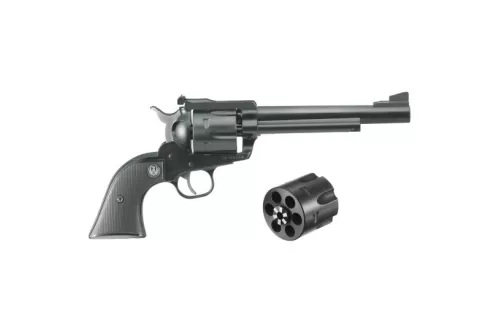
(13)
Ruger Blackhawk .357 mag / 9mm Luger Convertible Revolver, Black - 0318
Brand:
Ruger
Action:
Single Action
Barrel Length:
6.5"
Caliber:
.357 Mag/9×19mm Parabellum
Capacity:
6
Finish Per Color:
Blued


(10)
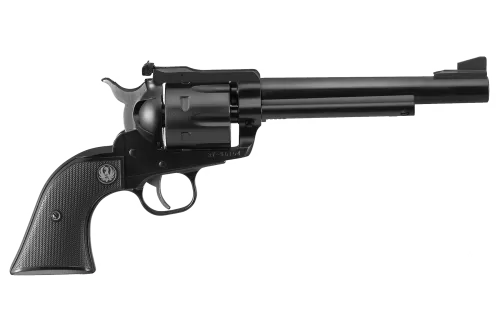
RUGER NEW MODEL BLACKHAWK
Brand:
Ruger
Action:
Single Action
Barrel Length:
6.5"
Caliber:
.357 Mag
Capacity:
6
Finish Per Color:
Blued
(6)
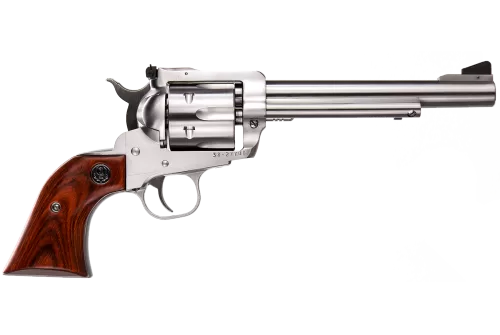
RUGER NEW MODEL BLACKHAWK
Brand:
Ruger
Action:
Single Action
Barrel Length:
6.5"
Caliber:
.357 Mag
Capacity:
6
Finish Per Color:
Stainless
(14)
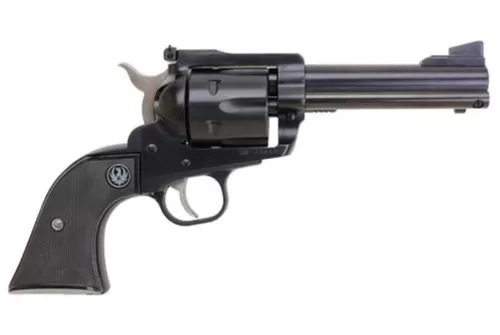
RUGER NEW MODEL BLACKHAWK
Brand:
Ruger
Action:
Single Action
Barrel Length:
4.63"
Caliber:
.357 Mag
Capacity:
6
Finish Per Color:
Blued
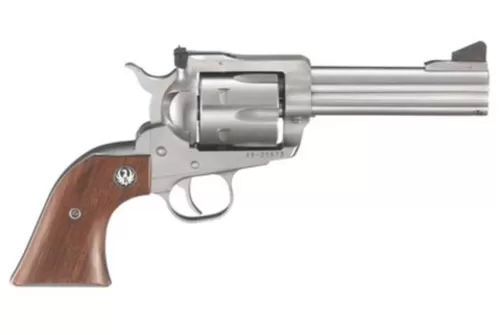
(10)
Ruger Blackhawk 357 Magnum/38 Spl 4-5/8" Barrel SS 6rd Hardwood Grip
Brand:
Ruger
Action:
Single Action
Barrel Length:
4.63"
Caliber:
.357 Mag
Capacity:
6
Finish Per Color:
Stainless
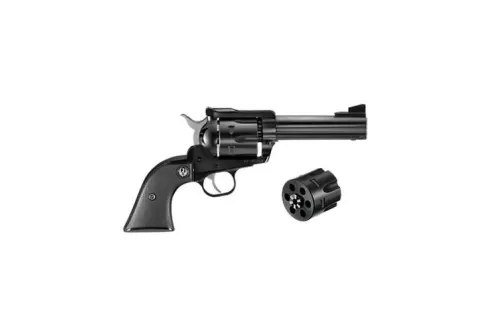
(10)
Ruger Blackhawk Conversion 357/9MM 4.6-inch BL
Brand:
Ruger
Action:
Single Action
Barrel Length:
4.63"
Caliber:
.357 Mag
Capacity:
6
Finish Per Color:
Blued
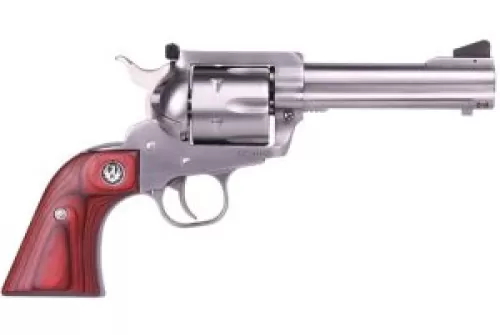
(0)
Ruger Flattop 357/9Mm Ss/Wd 4-5/8"As 5245 736676052455
Brand:
Ruger
Action:
Single Action
Barrel Length:
4.63"
Caliber:
.357 Mag
Capacity:
6
Finish Per Color:
Stainless
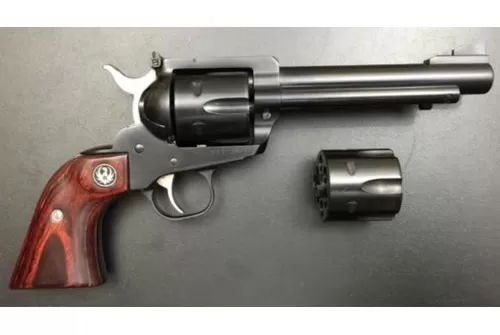
(0)
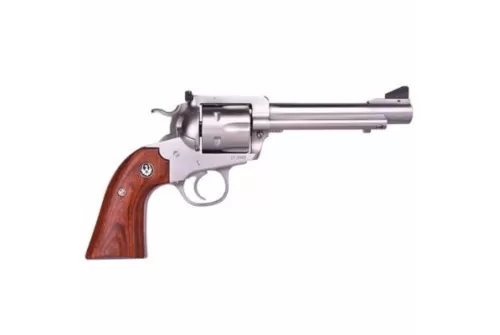
Ruger Flattop 357/9Mm Bl/Wd 5.5" AS 5246 736676052462
Brand:
Ruger
Action:
Single Action
Barrel Length:
4"
Caliber:
.357 Mag/9×19mm Parabellum
Capacity:
6
Finish Per Color:
Blued
(0)
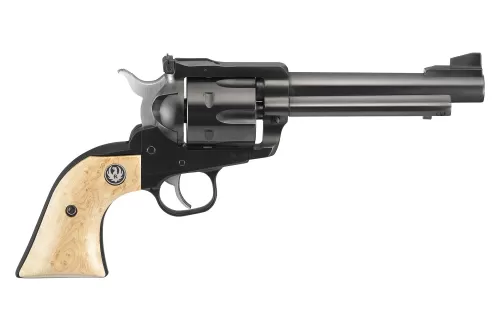
Ruger Blackhawk Flattop .357 Mag / 9mm 4.625" Barrel 6-Rounds
Action:
Single Action
Barrel Length:
4.63"
Caliber:
.357 Mag
Capacity:
6
Finish Per Color:
Blued
(6)
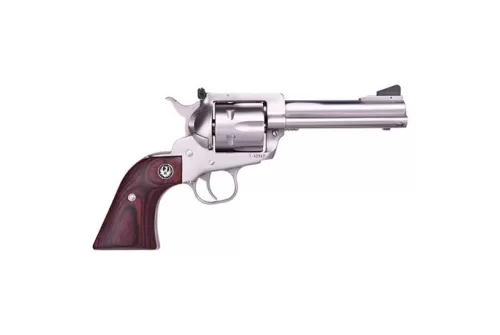
Ruger Blackhawk Convertible Black .357 Mag / 9mm 5.5" Barrel 6-Rounds
Brand:
Ruger
Action:
Single Action
Barrel Length:
5.5"
Caliber:
.357 Mag
Capacity:
6
Finish Per Color:
Blued
(3)
Ruger Blackhawk Convertible .357 Magnum / 9mm 5.5" Barrel Pistol, Stainless Steel - 5247
Brand:
Ruger
Action:
Single Action
Barrel Length:
5.5"
Caliber:
.357 Mag/9×19mm Parabellum
Capacity:
6
Finish Per Color:
Stainless
(0)
RUGER Blackhawk Bisley .357 Mag/9mm 5.5in 6rd Convertible Revolver (00358)
Brand:
Ruger
Action:
Single Action
Barrel Length:
5.5"
Caliber:
.357 Mag
Capacity:
6
Finish Per Color:
Stainless
(8)
Ruger BLACKHAWK 357MAG 4-5/8 SS 6RD
Brand:
Ruger
Action:
Single Action
Barrel Length:
4.6"
Caliber:
.357 Mag
Capacity:
6
Finish Per Color:
Stainless
Marketplace Insights
★ 4.8/5
based on 25 customer reviews across 13 products from 6 retailers
Highly praised Ruger Blackhawk convertible revolver with exceptional accuracy, caliber versatility, and smooth performance; minor issues with grip fit and cocking difficulty for small hands.
What customers like
Caliber Versatility56%
With the 6.5 in barrel you can use 9mm or 38 special for target practice
Accuracy & Performance48%
More accurate than I am. Grabagun always sends quality and their prices are great
Smooth Trigger & Feel36%
trigger is EXCEPTIONALLY smooth on this gun with a just right pull weight
Cost-Effective Shooting24%
9mm is half the cost of 38 spl's i can shoot more for the same $
Quality & Build20%
It's a ruge r and built like a tank
Common concerns
Difficult Cocking for Small Hands8%
It's difficult for me to cock the revolver without changing my grip
Loose/Gapped Grips8%
Disappointingly, the grips had a gap & were slightly loose
Frequently Asked Questions
Ruger Blackhawk 357 revolver for sale
Is the Ruger Blackhawk a good revolver?
The Ruger Blackhawk is a reliable, well-built single-action revolver suited for hunting, competition, and range use. Its transfer bar safety is robust, and it handles powerful cartridges well. Single-action operation requires manual cocking before each shot, which takes adjustment if you're used to double-action revolvers.
How much is a Ruger 357 Blackhawk revolver worth?
Ruger Blackhawk revolvers in .357 Magnum typically sell for $600–$900 on the secondary market depending on condition, barrel length, and finish. New models carry an MSRP of roughly $659–$759. Used examples in excellent condition often fetch $700–$850 at auction or through dealers.
Can the Ruger Blackhawk shoot other rounds?
Yes. The .357 Magnum Blackhawk safely fires both .357 Magnum and .38 Special ammunition. Some models also come with convertible cylinder options, such as 9mm paired with .357 Magnum, allowing additional caliber flexibility.
What's the difference between old and new Blackhawks?
Old Model Blackhawks (pre-1973) use a three-screw design, with pre-1963 versions featuring a smaller Flat Top frame. New Models have a transfer bar safety system and two-screw construction. Post-1963 Old Models and New Models share the same frame size. Older guns often show superior finish quality.
When was the Ruger 357 Blackhawk made?
Ruger introduced the .357 Magnum Blackhawk in 1955. The original "Old Model" was produced until 1973, when Ruger replaced it with the "New Model" featuring a transfer bar safety system. New Model variants remain in production today.
Does a 357 kick more than a 9mm?
Yes, .357 Magnum produces significantly more recoil than 9mm. The .357 generates roughly double the recoil energy—around 10 foot-pounds compared to 4.5 for 9mm—due to its higher velocity and heavier powder charge, requiring more shooter control.
What is the best barrel length for 357?
Barrel length depends on intended use. For hunting, 6 to 8 inches maximizes velocity and accuracy. For concealed carry, 3 to 4 inches balances shootability with portability. Avoid barrels shorter than 3 inches, as they waste powder potential and significantly reduce the cartridge's velocity advantage.