
Kimber K6s DCR for sale
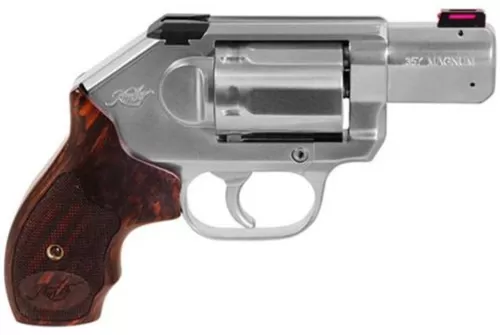
(20)
Kimber K6s DCR (Deluxe Carry Revolver) .357 Mag.
Brand:
Kimber
Action:
Double Action
Barrel Length:
2"
Caliber:
.38 S&W Special
Capacity:
6
Finish Per Color:
Stainless


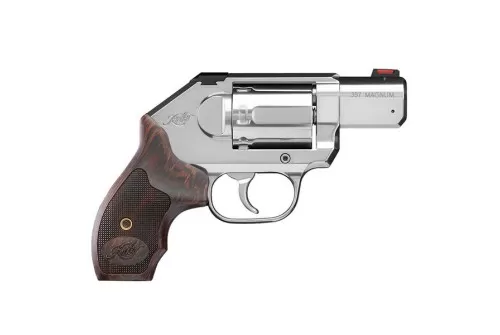
(1)
KIMBER K6S DCR
Brand:
Kimber
Action:
Semi-Auto
Barrel Length:
2"
Caliber:
.357 Mag
Capacity:
6
Finish Per Color:
Silver
Marketplace Insights
★ 4.7/5
based on 20 customer reviews across 2 products from 3 retailers
Highly praised compact revolver praised for build quality, concealability and reliability, though some users note high price and recoil management challenges.
What customers like
Excellent Build Quality65%
Beautiful and well manufactured firearm. I was really impressed with the fluid fit and finish
Ideal for Concealed Carry60%
it carries and conceals good and well made. Definitely my new carry gun
Smooth Trigger Performance35%
One pull of the trigger is all it takes to convince you that this is one of the smoothest revolvers
Reliable 6-Round Capacity25%
with 6 shots. Hard to beat that combination
Excellent Sights & Accuracy25%
Great sights and trigger, love the finish and grips
Common concerns
Premium Price Point20%
This is way overpriced. No different than the regular one except it has night sites?
Significant Recoil & Hand Soreness15%
The web of my hand sore as hell from first shot to last
Small/Uncomfortable Grip15%
Haven't perfected my grip to keep it from rattling my right hand
Frequently Asked Questions
Kimber K6s DCR for sale
Is kimber K6s drop safe?
The Kimber K6s uses an internal hammer block safety, which prevents the hammer from striking the firing pin unless the trigger is fully pulled. This makes it drop safe under normal conditions. Avoid modifying internal components, as changes to the firing pin or springs can compromise this protection.
Is it okay to dry fire a Kimber K6s?
Kimber's dry firing guidance covers pistols only, not revolvers like the K6s. There are documented cases of firing pin breakage from dry firing the K6s without snap caps. Always use snap caps with this revolver to protect the firing pin from damage during dry fire practice.
What ammo is best for the Kimber K6s?
Your K6s chambers both .38 Special and .357 Magnum. For practice, use .38 Special to reduce recoil and cost. For carry, 125-grain .357 Magnum hollow points are a strong choice. Speer Gold Dot and Hornady Critical Defense are well-regarded options. Always verify function and point of impact with your specific gun.
Why does Kimber have a bad reputation?
Kimber's reputation suffers mainly due to inconsistent quality control in their 1911 pistols. Some owners report reliability problems like failures to feed or eject, while others have no issues. This batch-to-batch inconsistency, combined with a premium price point, fuels criticism when guns underperform expectations.
How reliable is the Kimber K6s?
The K6s is generally considered reliable. Users report consistent performance and solid build quality. No widespread mechanical issues have been documented. As with any firearm, regular cleaning and proper ammunition selection help maintain reliable function.
Is a 357 more powerful than a 45 ACP?
.357 Magnum generates significantly higher velocity and muzzle energy than .45 ACP, making it more powerful by ballistic measures. The .45 ACP fires a larger, heavier bullet with less recoil. Both are effective for defense, but .357 Magnum has a clear energy advantage.
Is a 357 more powerful than a 10mm?
On paper, 10mm and .357 Magnum produce similar ballistic results. The 10mm operates at higher pressure (37,500 PSI vs. 35,000 PSI), but .357 Magnum's longer case can deliver equally powerful loads. Neither decisively outpowers the other; performance depends on specific ammunition chosen.