
Winchester .45-70 Ammo
Updated · 4 products · 2 in stock · prices refreshed daily
(1)
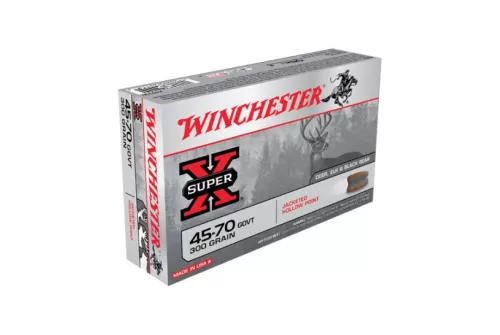
Winchester 45-70 Government 300gr JHP Super X Ammunition, 20 RoundBox - X4570H
Brand:
Winchester
Bullet Type:
Jacketed Hollow Point
Caliber:
.45-70 Government
Grains:
300 grain
Rounds:
20
 From:
$43.39
From:
$43.39
 23
23
(0)
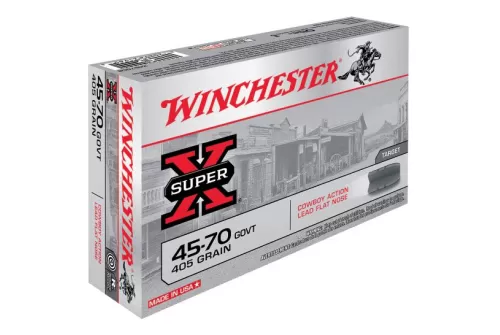
Winchester Ammunition Super-X 405 gr Lead Flat Nose .45-70 Ammo, 20/box - X4570CB
Brand:
Winchester
Bullet Type:
Lead Flat Nose
Caliber:
.45-70 Government
Grains:
405 grain
Rounds:
20
From:
$42.62
20
(0)
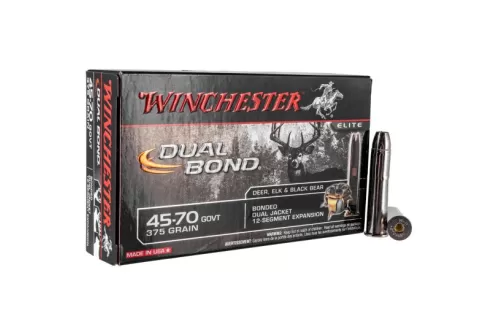
Winchester Ammunition Dual Bond 375 gr .45-70 Ammo, 20/box - S4570DB
Brand:
Winchester
Bullet Type:
Bonded Dual Jacket 12-Segment Expansion
Caliber:
.45-70 Government
Grains:
375 grain
Rounds:
20
(0)
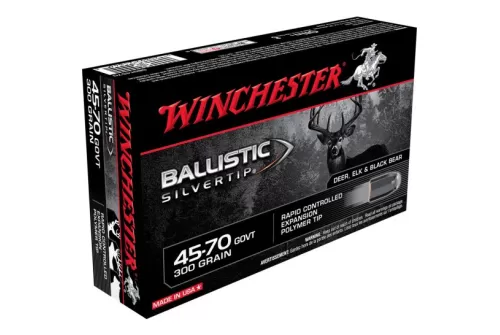
Winchester Ammunition Ballistic Silvertip 300 gr Polymer Tip .45-70 Ammo, 20/box - SBST4570
Brand:
Winchester
Bullet Type:
POLYMER TIP
Caliber:
.45-70 Government
Grains:
300 grain
Rounds:
20
Marketplace Insights
★ 4.9/5
based on 14 customer reviews across 4 products from 24 retailers
Outstanding Winchester 1886 reproduction with exceptional build quality, smooth action, and modern steel—nearly universal praise with only one minor complaint about initial stiffness.
What customers like
Smooth Action43%
Slick and smooth action, hits with authority and very accurate as well
Quality Craftsmanship43%
Fit, finish, wood and overall workmanship are excellent
Accuracy & Performance36%
It's very accurate, but light so it WILL wallop you with heavy loads
Modern Steel Quality21%
Built with far better steel than the originals, and to tighter tolerances
Classic Design Appeal21%
it's like stepping back in time I absolutely love this Winchester
Common concerns
Stiff Action Initially7%
I was surprised how rough the action was. I'm sure it would smooth out
Frequently Asked Questions
Winchester .45-70 Ammo
Why is 45-70 so hard to find?
45-70 isn't especially scarce. Multiple manufacturers produce factory loads, and it's stocked by most major retailers. Prices typically run around $57 per box. Specific loads or bullet weights may be harder to locate locally, but online availability is generally reliable.
Is a 45-70 overkill for deer?
Not necessarily. The 45-70 works fine for deer with appropriate loads. Lower-velocity factory rounds produce minimal meat damage compared to high-velocity cartridges. Recoil is manageable for most hunters, and while it exceeds what's strictly needed, it remains a practical and effective deer cartridge.
What are the drawbacks of using a 45-70?
Significant recoil makes follow-up shots slower and fatiguing. Effective range is limited to roughly 150 yards due to low velocity and steep trajectory. Ammunition costs more than common rifle cartridges, and lever-action rifles chambered in 45-70 tend to be heavier and bulkier than modern alternatives.
What is the killing range of a 45-70?
Effective hunting range sits around 150–250 yards depending on load and shooter skill. The cartridge drops steeply beyond that due to low velocity. Most hunters keep shots under 200 yards. The 45-70 excels as a close- to medium-range woods cartridge capable of taking any North American game.
Is 45-70 enough for elk?
Yes. The 45-70 is adequate for elk, particularly within 150-200 yards. Use heavy bullets of 300 grains or more from quality loads. The cartridge delivers substantial energy at close to moderate ranges. Shot placement remains critical, as it does with any caliber.
What should I zero my 45-70 at?
100 yards works well for most 45-70 hunting. Standard 405-grain loads zeroed there stay within about 5 inches of point of aim out to 150 yards. If your shots are consistently under 100 yards, a 50-yard zero is simpler. Adjust based on your specific load and maximum hunting distance.
Is a 45-70 more powerful than a 308?
Yes, generally. The 45-70 launches a heavier bullet producing more muzzle energy and terminal impact, making it effective on large dangerous game. The 308 shoots faster with a flatter trajectory, better suited for longer ranges. At close range, the 45-70 hits harder; beyond 200 yards, the 308 outperforms it.
What is the best distance to zero a 45-70?
100 yards works well for most hunting with a 45-70. It keeps you within 3–5 inches of point of aim out to roughly 150 yards depending on your load. If your longest shots run under 100 yards, zeroing at 50 yards simplifies things. Start at 25 yards to get on paper, then move to your final distance.
Is a 45-70 better than a 30/30?
It depends on the game and range. The 45-70 hits harder at close range, making it better for elk or bear. The 30-30 shoots flatter and recoils less, suiting deer hunting well. Neither is universally superior—choose based on your target species and typical shot distance.
What is the best grain weight for 45-70?
For deer, 300-350 grain bullets work well. The 405-grain is a versatile all-around choice. For large or dangerous game like bear or elk, 500-grain hardcast delivers maximum penetration. Consider your rifle's action strength—older lever guns may require lower-pressure loads regardless of bullet weight.
Does 45-70 kick harder than 30-06?
Not necessarily. The recoil comparison is nuanced — typical factory 45-70 loads produce recoil only slightly above a 30-06 with comparable loads, and some sources note the 30-06 can actually feel sharper. Rifle weight also plays a role, with heavier lever-action 45-70 rifles often reducing felt recoil considerably.
Is 45-70 more powerful than 308?
Yes. The 45-70 generates more energy at the muzzle, firing a much heavier bullet (300–500 gr) at lower velocity. The 308 fires lighter bullets faster with a flatter trajectory. The 45-70 excels at short range against large game; the 308 offers better accuracy and range for most hunting and tactical use.
Will a 45-70 stop a grizzly?
Yes, the .45-70 can stop a grizzly. For serious bear defense, experienced users recommend heavy hardcast bullets of 400gr and above — with 525gr hardcast loads among preferred choices. Standard cowboy or trapdoor loads lack sufficient penetration. Shot placement remains critical — brain or spine shots are most reliable in a charge.
Did Winchester make a 45-70 lever-action rifle?
Yes. Winchester made the Model 1886, designed by John Moses Browning, chambered in 45-70. Production ran from 1886 to 1935. It is considered one of the strongest lever-action designs ever built. Modern reproductions are available from several manufacturers.
How much does a 45-70 drop at 100 yards?
Bullet drop at 100 yards depends on your zero distance and load. If zeroed at 100 yards, there's no drop at that distance. Zeroed at 200 yards, the bullet hits roughly 7 inches high at 100 yards. Specific loads vary based on bullet weight and velocity.