
77 Grain 5.56 Ammo
Updated · 3 products · 2 in stock · prices refreshed daily
(2)
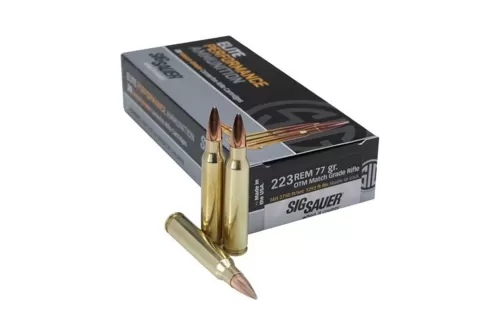
Sig Sauer Elite Match Grade 5.56mm NATO 77gr OTM Rifle Ammo - 20 Rounds
Brand:
Sig Sauer
Bullet Type:
Open Tip Match
Caliber:
5.56×45mm NATO
Capacity:
20
Finish Per Color:
Brass
Grains:
77 grain
 From:
$29.99
From:
$29.99
 13
13
(1)
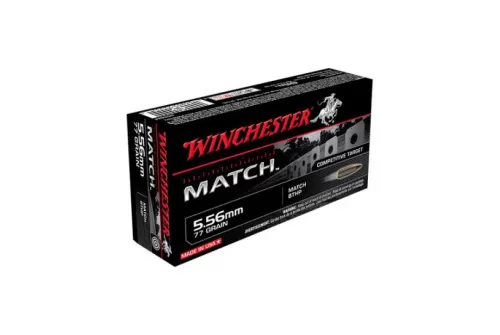
Winchester 5.56mm 77gr BTHP Match Ammunition, 20 Round Box - S556M
Brand:
Winchester
Bullet Type:
SIERRA MATCHKING BOAT TAIL HOLLOW POINT (BTHP)
Caliber:
5.56×45mm NATO
Capacity:
20
Finish Per Color:
Brass
Grains:
77 grain
From:
$24.99
10
(0)
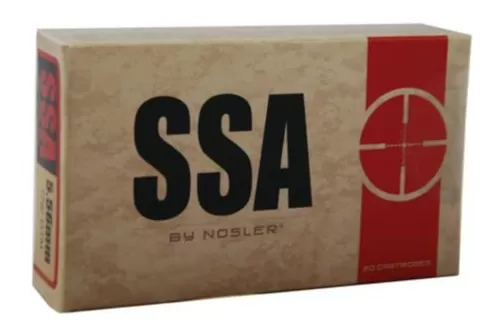
Ssa 556nato 77gr Cc Otm Hpbt 20/400
Brand:
SSA
Bullet Type:
Hollow Point
Caliber:
5.56×45mm NATO
Grains:
77 grain
Rounds:
20
Frequently Asked Questions
77 Grain 5.56 Ammo
What is 77 grain 5.56 ammo good for?
77 grain 5.56 is well-suited for long-range shooting and competition. The heavier bullet resists wind drift better than lighter loads like 55 grain, improving accuracy beyond 300 yards. It's a common choice for precision rifle matches and serious range work.
What does 77 grain otm mean?
77 grain OTM refers to a bullet weighing 77 grains with an Open Tip Match design. While the open tip originates as a manufacturing feature, these bullets do fragment in tissue, producing significant tissue disruption. This bullet weight is popular in 5.56mm/.223 rifles for competition and long-range shooting.
Will 1.8 twist stabilize 77 grain?
Yes, 1:8 twist reliably stabilizes 77 grain bullets in 5.56mm/.223. It's the most common recommendation for this bullet weight. A 1:7 twist works too but offers no practical accuracy advantage for 77 grain projectiles in most applications.
Why are OTM bullets more accurate?
OTM bullets are made base-first, which creates a very consistent base — the primary driver of their accuracy advantage over traditional FMJs. The open tip is simply a byproduct of this manufacturing process. That base consistency reduces variation and supports tighter groups in competition and long-range shooting.
What is the best ammo for 5.56 77gr?
For precision and competition shooting, Sierra MatchKing 77gr OTM, Black Hills 77gr, and Nosler 77gr Custom Competition are top performers. Black Hills is widely regarded as the best long-range 5.56 option at $1.40+ per round. All three work reliably across most rifle configurations.
What is the trajectory of 55 grain vs 77 grain?
At 100 yards, 55 and 77 grain bullets can differ noticeably in drop depending on zero. The 77 grain has a higher ballistic coefficient, so it resists wind better and retains energy at distance. However, it does not necessarily drop less — its long-range advantage is energy retention, not a flatter trajectory.